
Vendor:
Sankodo
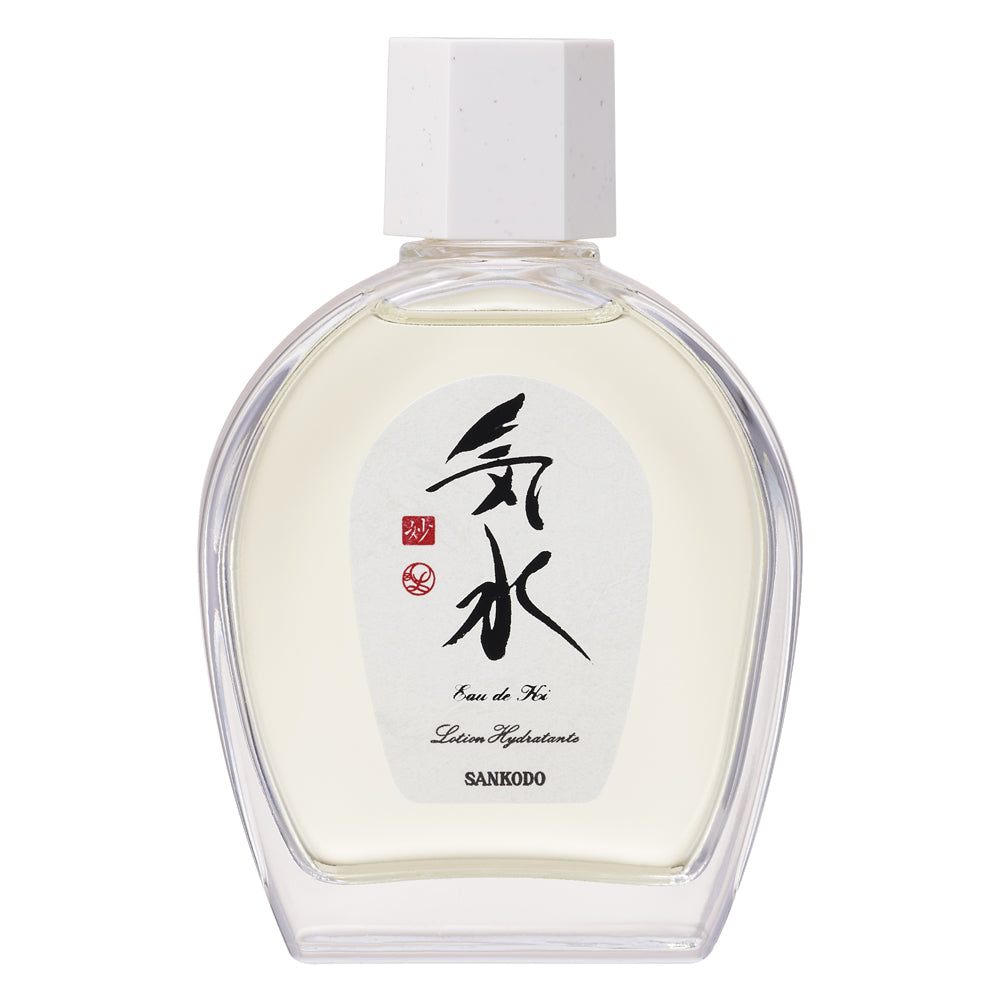
EAU DE KI Beauty Elixir
Regular price
€160,00
Sale price
€160,00
Eau de Ki, a beauty elixir that the Sankodo company has been producing since 1926 through a fermentation process that lasts months, comparable to that used to produce sake (traditional Japanese rice wine). Eau de Ki is formulated from the union of 8 plants from traditional Eastern medicine and 4 Western medicinal plants. An elixir that allows the skin to regenerate naturally. It has a DETOXIFYING, ULTRA-MOISTURIZING, BRIGHTENING action
“Perfection and purity are the concepts behind Eau de Ki, a beauty elixir that contains only twelve ingredients. It is a cult product worldwide, has existed in Japan for eighty years, and is now arriving in our country.”
How to use:
Normal skin: Gently pat the face with a soaked cotton pad and let the elixir penetrate the skin without rinsing.
Sensitive skin: Add two drops of Eau de Ki to a water-soaked cotton pad, wring it out, and gently wipe it over the skin.
Body ritual: Gently run a cotton ball soaked in Eau de Ki over all parts of the body, especially those that show signs of aging such as the décolletage, neck, but also where skin is prone to acne or on particularly dry areas like elbows and heels. You can also apply Eau de Ki to the palms of wet hands and gently touch your entire face and body.
Share

Frequently Asked Questions
The different concentrations indicate the percentage of fragrant oils present in the fragrance. In general, Extrait de Parfum is the most intense and long-lasting version, followed by Eau de Parfum and Eau de Toilette, which is lighter and fresher.
The longevity of a fragrance depends on the perfume's concentration, olfactory composition, and skin type. On average, an Eau de Parfum can last from 6 to 8 hours, while an Extrait de Parfum can last even longer.
To preserve its quality, it is advisable to store perfume away from direct light, heat sources, and temperature fluctuations. The ideal place is cool, dry, and protected from light.
Many contemporary fragrances are designed to be worn freely by anyone. In artistic perfumery, compositions do not follow rigid gender categories but are designed to adapt to the personality and skin of the wearer.